
Never-ending New Jersey drunk driving case highlights fundamental reason why sentencing is so dang hard
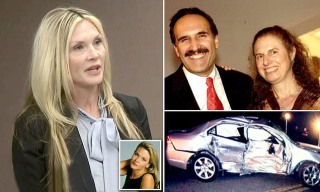
A state appellate court ruled Wednesday that actress Amy Locane, convicted in connection with a fatal drunken driving accident a decade ago in Montgomery, must be sentenced for a fourth time because the first three times were either illegal sentences or sentences imposed outside the state’s criminal code.
In a 41-page decision, the appellate court ruled that the latest sentence in the case, handed down by Superior Court Judge Kevin Shanahan in February 2019, was “illogical” based on an “unauthorized sentencing theory” that weighed on what he called “the yin and yang” of the case’s facts….
James Wronko, Locane’s attorney, said he will ask the state Supreme Court to review the decision. “I don’t know what society gains by putting the mother of two back in jail,” Wronko said.
Shanahan sentenced Locane to five years in prison, but stayed the sentence because he did not consider her a flight risk. The Somerset County Prosecutor’s Office argued the sentence should not be stayed and appealed the judge’s decision.
Locane previously had been sentenced to three years in state prison on charges of vehicular homicide and assault by auto in connection with the death of Helene Seeman in the crash. Her husband, Fred, was severely injured in the crash as the couple were turning into their driveway of their weekend home at 9 p.m. on June 27, 2010. Locane is an actress who starred with Johnny Depp in “Cry-Baby” and was a featured actress on the TV series “Melrose Place.”…
The Somerset County Prosecutor’s Office first appealed the the three-year sentence that was handed down by retired Superior Court Judge Robert Reed who presided over the trial. Locane served 85 percent of that sentence at the Edna Mahan Correctional Facility for Women in Hunterdon County. She also successfully completed the conditions of her parole a year ago, Wronko said. “She’s led an exemplary life since her release,” Wronko said….
In handing down the five-year sentence, Shanahan said that imposing a higher sentence “would have been an exercise in bad judgment, just like all the others.” Shanahan also said that he was not bound by previous Appellate Court rulings in the case.
“Clearly, changes in (Locane’s) personal circumstances warrant divergence,” the Appellate Court wrote in the decision, “but it is rudimentary that a trial judge is bound by our prior decision. (Shanahan) ignored the prior findings, while seemingly giving them lip service.”
So, in a sad drunk driving case involving a fatal result, New Jersey courts have now been trying and failing to figure out Amy Locane’s “right” sentence for now a full decade. In that time, the defendant has served out a three-year (“wrong”) prison sentence (and also paid $1.5 million of a nearly $5 million civil settlement). I can only speculate about how many (mostly taxpayer) resources have been expended in all these court proceedings trying to get to the “right” sentence, and I wonder whether the surviving victims are really eager to start another decade of wrangling over finding the “right” sentence.
Of course, I keep putting “right” in quotes when discussing this matter because there obviously is no clear right sentence in this case (or most cases). Sentencing is so dang hard in part because it lacks a clear right/wrong metric no matter what sentencing philosophies one is inclined to adopt. Moreover, this case especially spotlights the fundamental challenge balancing aggravating offense factors (especially a victim’s death) with mitigating offender factors (addiction and lack of criminal history). The latest appellate opinion (available here) showcases how sentencing judges here have generally focused on the offender, while the appellate judges have focused on the offense (at p. 36):
In this case, the focus has repeatedly shifted away from the crime defendant committed to her individual characteristics at the expense of imposing a just sentence reflective of her offense and the harm she caused. That she was struggling with addiction did not authorize the court to close its eyes to the harm she inflicted on the victims, the victims’ family, and the community. That harm will never dissipate. The loss of a loved one, and serious physical injury to another, can never be compensated.
Ironically, another round of resentencing strikes me as a fool’s errand in part because I agree with this court’s sentiment that the harm caused by Amy Locane “will never dissipate” and “can never be compensated.” Because there is no way the law through any form of punishment can make this kind of harm go away, I struggle to see what is likely to be achieved when the state uses more taxpayer resources to try, yet again, to add still more years to Locane’s sentence.
Notably, there is no mention in this latest appellate opinion of just what the victims of this now-long-ago offense might now want. I hope for their sake that starting another decade of wrangling over Locane’s sentence does not rub salt into their wounds. I also wonder if some kind of restorative justice efforts have been tried or might now be started to enable the victims and the defendant here to get some measure of peace and resolution that the New Jersey courts have been unable so far to provide.
Prior related post: