
Federal prison population, due seemingly to COVID responses, hits another modern low (which is still very high)
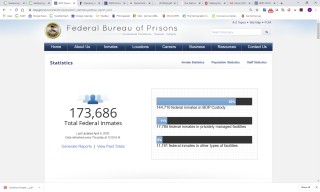
But this morning, we are down to a federal prison population of “only” 173,686 inmates. I put “only” in quotes because back in 1980 we had only 24,640 federal prisoners. But the next 30+ years, through the heart of the “tough-and-tougher,” the federal prison population grew by 900% as both Democratic and Republican administrations invested more and more money on more and more federal prosecutions while generally asking for longer and longer sentences for those who were federally convicted.
But, after 2013, a range of political, social and practical realities helped create a new and steady trend of reduced federal incarceration levels. Notably (though not often noted), data here from the US Sentencing Commission shows there were roughly 20,000 fewer offenders being sentenced in the federal system between 2011 (when 86,201 persons were sentenced in federal courts) and 2017 (when “only” 66,873 persons were sentenced). In addition, retroactively applied reductions in crack sentences and then in all drug sentences contributed to further federal decarceration.
But, starting in 2018, the number of offenders being sentenced in the federal system started to tick back up; in 2019, according to the USSC, we were all the way back up to 76,538 sentenced federal offenders. Yet, working the other way, the new good-time credit flowing from the FIRST STEP Act and other reforms in that Act helped to thwart a complete reversal in the downward trends of the total number of persons in federal prison. I commented in this post back in July 2019 that, thanks in part to Obama era developments and the FIRST STEP Act, the federal prison population had dropped under 180,000 prisoners for the first time since way back in FY 2003. At that moment, I was truly unsure how various cross-cutting trends might impact the federal prison population in the months and years to come. I made these concluding points in that prior post:
I have been following these numbers closely for a number of years, and I have been especially focused on week-to-week changes during the years of the Trump Administration because I feared that an uptick in federal prosecutions and various new sentencing directives begun under then-Attorney General Jeff Sessions might reverse the trend of prison population reduction that started during the second part of the Obama Administration. But it seems that a lot of forces worked in various ways to kept the federal prison population at just over 180,000 inmates for much of the last three years. And now, thanks to the FIRST STEP Act’s “good time fix” finally kicking in, we are this week significantly below that 180,000 inmate threshold.
I would love to be able to predict that the FIRST STEP Act will ensure that the federal prison population keeps going down, but I am not sure that would be a sound prediction. It is possible that the continued robust implementation of various components of the FIRST STEP Act will keep the downward trends moving. But continued increases in the number of cases prosecutors by the Justice Department could get us back to an era of federal prison population growth (though that growth would likely be relatively modest).
Of course, we are in a whole new world of federal crime and punishment now. We are in a COVID world. It is waaaaaaay too early to make any long-term predictions. But I wanted to flag today that we are at a new modern low with the federal prison population at “only” 173,686 inmates. Just two weeks ago, before judges were starting to reduces sentences in response to compassionate release motions and before Attorney General Barr urged the Bureau of Prisons to move more offenders into home confinement, this population count was over 175,000. Given this new COVID trend, I am inclined to predict we will see the federal population below 170,000 before the end of this month (though we should all know now how uncertain all COVID-related predictions must be).
Long term, as my prior comments are meant to highlight, what will likely matter most for the federal prison population is how many new offenders are getting sentenced and for how long. Will federal prosecutors be bringing thousands more federal fraud and firearm prosecutions in the months ahead? Will they be bringing thousands fewer federal drug and immigration prosecutions? Will federal sentencing judges be inclined to be more lenient (or less lenient) in a COVID world? As we see these prosecution and sentencing trends develop, we will know if the modern trend of federal decarceration will keep unfolding.