
Looking at mass incarceration as a kind of “new epidemic”
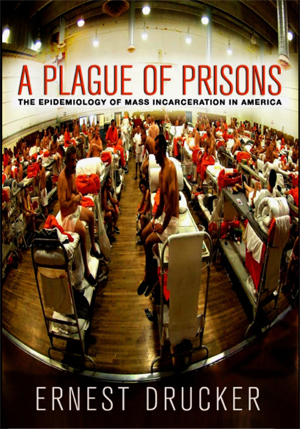
Here are some of the things we know about this new epidemic:
• The population involved is diverse: men and women, adults and children, different social classes….
• The effects of the epidemic extend beyond actual cases — over 30 million have been affected in the last thirty years.
• Young minority men have been affected most severely: although they make up only 3 percent of the U.S. population, young black and Hispanic men constitute over 30 percent of the cases.
• While this epidemic is nationwide, most cases have occurred in the poorest neighborhoods of America’s urban areas — in some communities, over 90 percent of families have afflicted members.
• Individuals who are afflicted are also socially marginalized and often become incapacitated for life — unable to find decent work, get proper housing, participate in the political system, or have a normal family life.
• The children of families affected by this new epidemic have lower life expectancy and are six to seven times more likely to acquire it themselves than the children of families not affected.
The new epidemic is mass incarceration — a plague of prisons.
Mass incarceration? The term seems out of place for America — a nation premised on individual rights and freedom. It conjures up images of brutal foreign tyrannies and totalitarian despots — widespread oppression and domination of individuals under regimes of state power built upon fear, terror, and the absence of effective legal protection. When we think of large-scale systems of imprisonment throughout history, we think of great crimes against humanity — Hitler’s network of diabolical concentration camps, or the vast hopelessness of Stalin’s archipelago of slave labor prison camps. Stalin’s system established a model for mass incarceration whose effects penetrated every corner of Russian society, shaping the experience of millions beyond those in the camps — most immediately the prisoners’ families. More broadly, it created an entire population living under the threat of arrest and arbitrary detention.
This model seems foreign to life in our democratic society — a product of different times and faraway places. Yet the facts about current-day American incarceration are stark. Today a total of 7.3 million individuals are under the control of the U.S. criminal justice system: 2.3 million prisoners behind bars, 800,000 parolees, and another 4.2 million people on probation. If this population had their own city, it would be the second largest in the country.