
“Right-winger + hard time = compassion?”
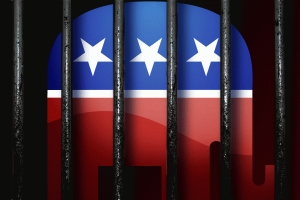
Last week, disgraced former congressman Duke Cunningham wrote a letter to several media outlets from the federal penitentiary where he has resided since 2006. In it, Cunningham, a conservative Republican who pleaded guilty in a public corruption case in 2005, waxed eloquent about an unlikely topic: prison reform.
“The United States has more more men & women in prison than any other nation including Russia and China,” he wrote. “The largest growing number of prisoners, women — 1-34 Americans are either on probation or in prison. The 95% conviction rate reached by threats of long sentences, intimidation, lies and prosecutorial abuse has got to be reckoned with now, not later.” Cunningham also promised he would dedicate his life to prison reform.
We’ve seen transformations like this before. Cunningham is the latest in a string of conservative political figures to see the light on prison reform following a stint behind bars.
Right-wing media mogul Conrad Black, for example, did two years’ hard time after being convicted in a 2007 fraud case. Following his release in 2010, Black has written passionately about prison reform.
While incarcerated, he learned “of the realities of street level American race relations; of the pathology of incorrigible criminals; and of the wasted opportunities for the reintegration of many of these people into society. I saw at close range the failure of the U.S. War on Drugs, with absurd sentences, (including 20 years for marijuana offences, although 42% of Americans have used marijuana and it is the greatest cash crop in California.).”
And, of course, Nixon aide Charles Colson devoted his life to criminal justice reform — and spreading Christianity among prisoners — after serving seven months in 1974 for obstruction of justice in a Watergate-related case. Colson’s Justice Fellowship organization lobbies for better conditions in prisons and reform of sentencing and the criminal code. The head of Justice Fellowship is Pat Nolan, a former conservative law-and-order Republican in the California assembly who devoted himself to prison reform after serving 29 months for corruption in the 1990s.
The piece concludes with a Q&A intereview in which I speculate on some of the reasons why some conservatives start talking about sentencing and prison reform after they have seen the operation of the criminal justice system first hand.