
New NAACP report laments shift of state funds from education to prison spending
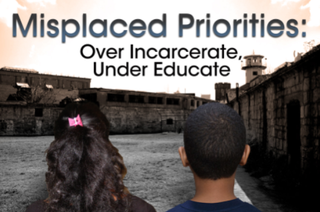
Misplaced Priorities tracks the steady shift of state funds away from education and toward the criminal justice system. Researchers have found that over-incarceration most often impacts vulnerable and minority populations, and that it destabilizes communities.
The report is part of the NAACP’s “Smart and Safe Campaign,” and offers a set of recommendations that will help policymakers in all 50 states downsize prison populations and shift the savings to education budgets.
The full report is available at this link, and here is a snippet from its executive summary:
In this new report, Misplaced Priorities: Over Incarcerate, Under Educate, NAACP researchers assembled data from leading research organizations and profiled six cities to show how escalating investments in incarceration over the past 30 years have undermined educational opportunities. Misplaced Priorities represents a call to action for public officials, policymakers, and local NAACP units and members by providing a framework to implement a policy agenda that will financially prioritize investments in education over incarceration, provide equal protection under the law, eliminate sentencing policies responsible for over incarceration, and advance public safety strategies that effectively increase healthy development in communities.
Misplaced Priorities echoes existing research on the impact excessive prison spending has on education budgets. Over the last two decades, as the criminal justice system came to assume a larger proportion of state discretionary dollars nationwide, state spending on prisons grew at six times the rate of state spending on higher education. In 2009, as the nation plummeted into the deepest recession in 30 years, funding for K–12 and higher education declined; however, in that same year, 33 states spent a larger proportion of their discretionary dollars on prisons than they had the year before.