
Assessing the different results for different federal defense attorneys
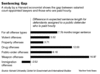 Adam Liptak has this terrific new article in the New York Times reporting on a new study by a Harvard economist which concludes that federal public defenders get better results than private lawyers appointed under the Criminal Justice Act. Here are parts of the article’s overview of the study:
Some poor people accused of federal crimes are represented by full-time federal public defenders who earn salaries, others by court-appointed lawyers who bill by the hour. A new study from an economist at Harvard says there is a surprisingly wide gap in how well the two groups perform.
Both kinds of lawyers are paid by the government, and they were long thought to perform about equally. But the study concludes that lawyers paid by the hour are less qualified and let cases drag on and achieve worse results for their clients, including sentences that average eight months longer. Appointed lawyers also cost taxpayers $61 million a year more than salaried public defenders would have cost.
There are many possible reasons for the differences in performance. Salaried public defenders generally handle more cases and have more interactions with prosecutors, so they may have a better sense of what they can negotiate for their clients. Salaried lawyers also tend to have superior credentials and more legal experience, the study found.
The full study by Radha Iyengar, which is entitled “An Analysis of the Performance of Federal Indigent Defense Counsel” can be accessed at this link. Notably, Jeralyn at TalkLeft writing here explains why she thinks “this study is seriously flawed.” I do not have the background necessary to assess the empirical work in this new study (and perhaps the folks at the ELS Blog will look closely at the data as a follow-up to this post).
Personally, I am not especially surprised by the result of this study because I find all federal public defenders to be great and the quality of CJA appointed lawyers to be very uneven. Moreover, addressing this issue from a more theoretical perspective, I published this article five years ago in the Iowa Law Review entitled “From Lawlessness to Too Much Law? Exploring the Risk of Disparity from Differences in Defense Counsel Under Guidelines Sentencing.” In the article, I flagged my concern that “poor defense representation or differences in the quality of defense counsel may create considerable risks of disparities and other unfair sentencing outcomes under the [Federal Sentencing] Guidelines.”