
New special issue of Science explores “Criminal Injustice: Mass Incarceration in the United States”
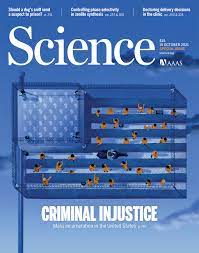
For much of the 20th century, the incarceration rate in the US was relatively stable. But beginning in the early 1970s, several decades of “tough on crime” policies contributed to a dramatic rise in incarceration. Today, despite recent declines, the US incarceration rate remains a global outlier. This system of mass incarceration is particularly hostile to Black Americans, who have been imprisoned in stunningly disproportionate numbers.
Amid burgeoning interest in scholarship on criminal justice, this special issue examines social science research on the state of mass incarceration in the US: its origin and expansion, its far-reaching effects on families and communities, and why the public tolerates and encourages it. Tracing the system’s roots back to slavery, researchers examine the interplay between incarceration, labor demand, and racial domination in the labor market. As criminal justice infrastructure has grown more costly and vast, the system has extracted wealth from poor communities that it preys upon to fiscally survive.
This ever-expanding web of incarceration entangles extraordinary numbers of people of all racial groups, with close to half of all Americans having a spouse or coparent, parent, sibling, or child that is or has been incarcerated. To support such a system, many Americans psychologically deny that structural racism is at the heart of criminal justice. Government responses to social justice protests often ignore root social causes and possible remedies and instead rely on policing. Also, law enforcement increasingly draws upon commercial technologies that challenge public oversight and democratic policing. Research on these topics is critical to reveal how we got here, as well as to inform and inspire change.
Here are links to the articles that follow, all of which are worth checking out:
“Policing social unrest and collective violence” by Elizabeth Hinton
“The corporate shadow in democratic policing” by Elizabeth E. Joh
“Assessing mass incarceration’s effects on families” by Hedwig Lee and Christopher Wildeman
“Exclusion and exploitation: The incarceration of Black Americans from slavery to the present” by Christopher Muller
“Toward an understanding of structural racism: Implications for criminal justice” by Julian M. Rucker and Jennifer A. Richeson
“The predatory dimension of criminal justice” by Joshua Page and Joe Soss