
New analysis confirms reduction in federal drug prosecutions in 2025
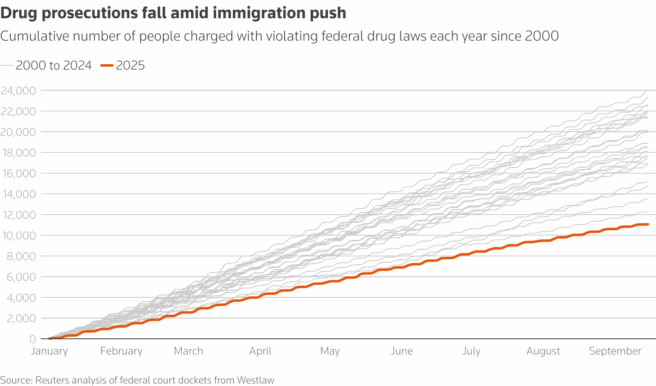
I have highlighted in recent posts about US Sentencing Commission sentencing data that in 2025 we have been seeing a relative uptick in immigration cases and downtick in drug cases as a percentage of the overall federal sentencing caselooad (see here and here). Today, Reuters has this notable new article headlined “Federal drug prosecutions fall to lowest level in decades as Trump shifts focus to deportations,” which more directly confirms the changing trends in the federal criminal caseload.
Here are a few excerpts from an article worth reading in full:
The number of people charged with breaking federal drug laws dropped to the lowest level in decades this year after the Trump administration ordered enforcement agencies to focus on deporting immigrants, a Reuters review of nearly 2 million federal court records found.
So far this year, about 10% fewer people have been prosecuted for drug violations compared to the same period of 2024, court records show, a drop of about 1,200 cases and the slowest rate since at least the late 1990s. The pullback was more dramatic for the types of conspiracy and money-laundering cases often used to pursue higher-level traffickers. The number of people charged with money-laundering dropped by 24%, according to Reuters’ analysis….
Prosecutions for drug and gun violations – a priority during Trump’s first term – started dropping under former President Joe Biden, when officials said they were grappling with a shortage of attorneys while also trying to focus on more complex investigations. But they reached new lows in almost every category this year after Trump returned to office, as the DEA shifted a quarter of its resources to immigration work.
Buyouts and purges of Trump’s perceived political opponents thinned the ranks at some enforcement agencies. The administration has proposed more budget cuts, opens new tab for federal law enforcement next year.
Trump’s appointees at the Justice Department told officials from almost their first day that virtually everything would take a back seat to immigration, two former DOJ officials said.