
How might ChatGPT sentence Sean “Diddy” Combs?
In an especially prescient passage published more than a half century ago, Judge Marvin Frankel had this observation in a book advocating for the development of sentencing guidelines:
It is not necessary, or desirable, to imagine that sentencing can be completely computerized. At the same time, the possibility of using computers as an aid toward orderly thought in sentencing need not be discounted in advance.
Marvin E. Frankel, Criminal Sentences: Law Without Order 114-15 (1972)
This passage came to mind as I reviewed the extraordinary work done by Jonathan Wroblewski in this essay over at the Sentencing Matters Substack. In the essay, Jonathan details the results of his astute and effective prompting of OpenAI’s gpt-4.1 to consider the upcoming sentencing of Sean Combs.
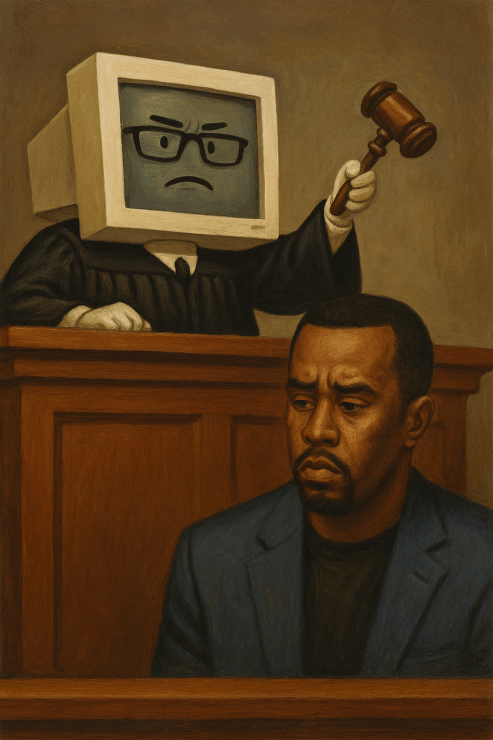
I generated this image via Microsoft CoPilot, but in this case a picture is not worth 1000 words; all sentencing fans will want to be sure to check out all the words that ChatGPT wrote, skillfully prompted by Jonathan, about the federal sentencing guidelines, the advocates’ sentencing recommendations, acquitted conduct sentencing, uncharged conduct sentencing, and broader aggravating and mitigating factors.
Folks will need to read the whole essay to understand how AI reached its notable final sentencing decision for Sean Combs. But every section of the essay seems to demonstrate that AI certainly can “aid toward orderly thought in sentencing.” Thanks in part to Jonathan’s amazing work here, whether and how AI should be a regular “aid” in sentencing is sure to be a hot topic for months and years to come.