
Making the case against “mass supervision”
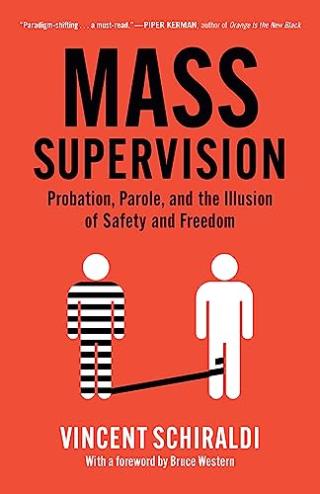
There are nearly 4 million people in the United States on parole and probation — about twice as many as are incarcerated in our prisons and jails. These individuals are not quite free in the way that the rest of us take for granted. Their homes can be searched without a warrant; they can be incarcerated without representation and held without bail; they do not have the right to remain silent; and they can be convicted of, and imprisoned for, noncriminal acts based on evidence that does not need to be proved beyond a reasonable doubt.
Probation (a front-end sentence intended as an alternative to incarceration) and parole (early release from prison for good behavior) have been around since the 1800s. Both originated as alternatives to what was a new but increasingly brutal penitentiary system and were intended to rehabilitate people in the community. They are unsuccessful on both counts.
In the 1970s, rehabilitation became a dirty word in criminal justice, and the system took a sharply punitive turn, setting the country on a march toward mass incarceration and mass supervision. Probation and parole pivoted to a “trail ’em, nail ’em, and jail ’em” approach. This ushered in a mushrooming of hard-to-meet supervision conditions and imprisonment for noncriminal supervision violations. From 1980 to 2008, there was a fivefold increase in the number of people under community supervision — topping 5 million at the peak — alongside a similar expansion in prison populations. Nearly 1 in 4 people entering state prisons are incarcerated for a technical violation of their supervision, not a new offense, costing taxpayers $2.8 billion annually….
Mass supervision has managed to make us less free and no safer, all at great cost. As policymakers look to reform their supervision systems, they should consider reducing — or, for some groups, eliminating — probation and parole supervision, replacing them with services offered by nonprofit and volunteer groups, and carefully studying the outcomes.
A number of states have downsized supervision, saved money and improved public safety. In Missouri, policymakers reduced probation terms by 30 days for every 30 days of compliance while under supervision. In the first three years, 36,000 people were able to reduce their terms by 14 months, the number under supervision dropped by 18 percent, and reconviction rates for those released early were the same as for those discharged from supervision before the policy went into effect. If less supervision has better outcomes at lower cost, it’s plausible that no supervision — and investing the resulting savings in community supports such as housing, employment, and drug and mental health services — might yield even better ones.
After nearly two centuries, probation and parole have failed to prove their worth. Let’s carefully experiment with, and assiduously study, the alternatives instead.
A couple recent press pieces about this book:
From NPR, “Almost 4 million people are on probation or parole. Here’s why that matters.“
From Slate, “The Largest Form of Criminal Punishment in the United States Is Not Prison. It’s Still Awful.“