
The Matthew Charles saga: another sad example of why complete abolition of parole was a mistake for federal sentencing
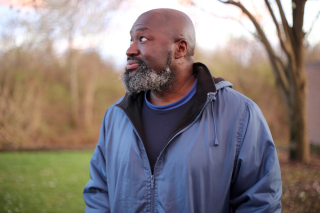
It looks like a party — but Charles isn’t leaving for a big new job, or trying his luck in a new city. He’s going to prison. To finish out a 35-year term for selling crack to an informant in the 90’s.
Charles had already served 21 years before his sentence was cut short as a result of crack guideline changes passed by the Obama administration. But the U.S. Attorney’s office appealed his release on the grounds that Charles was legally considered a “career offender” due to a prior stint in state prison. They said the retroactive change in the law did not apply to him — and a Court of Appeals agreed.
“He’s rebuilt his life and now they’re coming to snatch it,” says “Wolf”, who met Charles at a halfway house in 2016. They’ve volunteered together almost every Saturday since, long after fulfilling their community service requirements. Wolf is talking to John Hairston, an old friend of Charles’ who flew in from Houston. They’ve seen each other twice in over two decades — but for years, they wrote each other letters. “The whole thing pisses me off to be honest,” he says, partly to Wolf and partly to the group of guests seated at another table across the lawn, who’re listening intently and shaking their heads. “But it underscores how big a need there is for some reform in the justice system. I don’t care what they say.”
Since his release in 2016, Charles has held a steady job. He volunteers every Saturday, has reconnected with his family, and started a serious relationship. But really, his rehabilitation started years prior.
In prison, he took college classes and correspondence courses, he taught a GED program and became a law clerk. With his training, he helped other incarcerated men understand the judicial system long after their public defenders moved on to the next case.
Charles kept the secrets of those who were illiterate so they wouldn’t face ridicule or harassment — he read them letters from the court and drafted filings for them in the library. He organized bible studies and counseled newcomers. Two decades in federal insitututions — from maximum to low security — without a single disciplinary infraction.
Those that know Charles say they can’t understand why the justice system won’t recognize his rehabilitation. But the federal Bureau of Prisons did away with parole and most “good behavior” incentives years ago — even the best behaved must serve out the majority of their term.
Charles says the whole situation feels surreal. “I’m so tired” he says, after his hearing is postponed for the second time. “I am beyond tired. I always say to myself and others, ‘when is enough going to be enough?’”
Last time Charles faced time in prison, he was a drug dealer in his 20’s. At his sentencing in December 1996, a federal judge called Charles “a danger to society who should simply be off the streets.” Charles doesn’t dispute that. Until then, his entire life was embroiled in chaos….
Now in his 50’s, Charles has the support of friends and his community — and even the judge who ordered him back to prison. Everything is different. And yet, he says, nothing’s changed.
On March 28, in a courtroom filled with more than two dozen of Charles’ friends, coworkers and loved ones, Judge Aleta Trauger called Charles’ case “sad” and commended his “exemplary rehabilitation.” But, she added that “her hands were tied” and reimposed his original sentence. She gave him 45 days to get his affairs in order.
The ruling from the Sixth Circuit explaining why Charles’ sentencing reduction was improper is available at this link. It makes for an interesting read, as it notes that back in 1996 Charles’ “recommended guidelines range [was] 360 months to life, but [the sentencing court] varied upward and imposed a 420-month sentence based on Charles’ background and misconduct.” (I highlight this line because it itself reflects how the passage of time distorts reality: the original sentencing court did not quite “vary” upward because the concept of a “variance” did not exist prior to the 2005 Booker decision.)
The initial decision to impose a prison sentence of 35 years rather than just 30 years on Charles may have made perfect sense circa 1996. As explained by the Sixth Circuit, the district court had to consider “Charles’ many prior offenses: kidnapping a woman on two consecutive days ‘for the purpose of terrorizing her’; burglarizing a home; and fleeing from a police interrogation, shooting a man in the head, and attempting to run off in the victim’s car.” But, obviously, Charles is now a much different man than the man he was when committing all these prior offenses. But, just as obviously, modern federal sentencing law presents no way to give effect to changed realities because parole and other like mechanisms were vanquished through the Sentencing Reform Act of 1984.
I am a strong supporter of the FIRST STEP Act in part because it includes some parole-like features to enable the early release of offenders who have demonstrated rehabilitation potential in various ways. (In my Federal Probation article, I describe certain prison reform efforts by Congress as a kind of “parole light.”) But I continue to think the federal system would be even better served by considering a more general return of parole, at least for sentences of a decade or longer, or at least considering the kind of second-look resentencing provisions (allowing judicial modification after serving 15 years of prison sentence) that have been put forward in the new American Law Institute’s revised Modern Penal Code sentencing provisions (discussed here and here by leading academics).