
Could criminal defendants try to use GOP Prez candidate Trump’s bias claims to bollix up prosecutions?
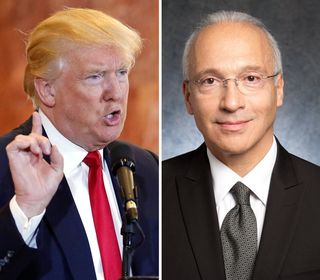
Donald Trump is intensifying his attacks on the federal judge presiding over fraud lawsuits against Trump University. On Friday the presumptive Republican presidential nominee, dismissing criticism from legal experts on the right and left, pressed his case against U.S. District Judge Gonzalo Curiel, saying the Indiana-born judge is biased against him because “he’s a Mexican. We’re building a wall between here and Mexico.”
Trump made the remarks, and others like it, repeatedly, in interviews with CNN and The Wall Street Journal, referring to Judge Curiel variously as “of Mexican heritage” or just “Mexican.” But the message was always the same, that the judge had what Trump called “a conflict” because of his ethnicity.
At a rally in San Diego last week, Trump characterized the judge as “a hater of Donald Trump, a hater. He’s a hater.” And “they ought to look into Judge Curiel.” In public, Trump has called repeatedly for the judge to recuse himself, but his lawyers in fact have not made any such request.
That is undoubtedly because court precedents are unanimous in holding that race, ethnicity, gender, religion and sexual orientation are not themselves grounds for disqualifying a judge. If they were, lethal ethicists observe, the legal system would fall into chaos because no judge would be free from taint. The five Supreme Court justices who are Catholic could not rule on a case in which the Catholic church participated, but neither could the other justices who are not Catholic.
Moreover, while Trump is free to say anything he wants about the judge, the lawyers in the case are bound by the professional rules of conduct and could be sanctioned for making such charges about Curiel without actual evidence of bias. Legal ethics expert Stephen Gillers notes in addition that litigants may not wait to seek a judge’s disqualification; they must move to recuse the judge as soon as they know there is a conflict.
Trump’s lawyers, from the prestigious O’Melveny & Myers firm, however, have not done that. Indeed, some observers argue that the judge did the candidate a big favor by postponing the trial in the case until after the election. And Trump did not become bellicose about Curiel until the judge, at the request of news organizations, ordered the unsealing of documents in the case — documents that have proved embarrassing for the GOP presumptive nominee.
“This is not really about rebutting accusations that Trump University defrauded its students,” said NYU’s Gillers. Rather, it is a kind of dog whistle to supporters, “a way to keep the subject of illegal Mexican immigration on the front page.”
Judge Curiel, appointed to the federal bench by President Obama, was born in Indiana, the son of Mexican-American immigrants. He served for 17 years as a federal prosecutor in California, rising to chief of narcotics enforcement in the southern district. In 1997 he was believed to be the target of an assassination attempt from a Mexican drug cartel, was put under 24-hour watch by the U.S. Marshall Service for a year, was moved to a military base and eventually to Justice Department headquarters in Washington, D.C.
I am not aware of any criminal defendants who have successfully sought disqualification of a judge (or a prosecutor) based solely on the basis of that judge’s race, ethnicity, gender, religion and sexual orientation. That said, I certainly have heard criminal defendants assert, like Donald Trump, that a prosecutor or a judge is biased on one of the bases. And if repeatedly making such claims in public to serve a political or personal agenda is good enough for the GOP’s Prez nominee, why couldn’t a criminal defendant unhappy with how a prosecution is moving forward start making similar claims to serve his hew own agenda?