
“Aging in Prison: Reducing Elder Incarceration and Promoting Public Safety”
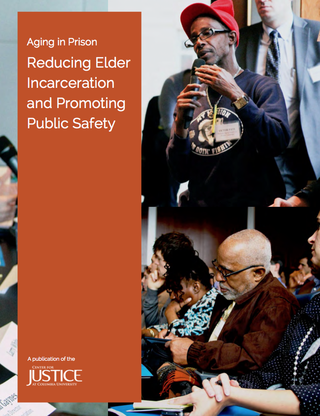
Columbia University’s Center for Justice, with Release Aging People in Prison/ RAPP, the Correctional Association of New York, the Osborne Association, the Be the Evidence Project/Fordham University, and the Florence V. Burden Foundation, coordinated a symposium in Spring of 2014 to discuss the rapidly growing population of elderly and aging people in prison. In attendance at the symposium were researchers, policy advocates, current and former policy makers and administrators, elected and appointed officials, and those who have directly experienced incarceration.
All agreed that while the overall prison population of New York State has declined in the past decade, the number of people aged 50 and older has increased at an alarming rate. The symposium provided the time and space for key stakeholders and actors to think critically about how best to address the phenomenon of New York’s aging prison population without compromising public safety.
A series of papers emerged from the symposium. Together, they provide a rich overview and analysis of aging people in prison from some of the best thinkers in this field. While the authors differ in opinion over some issues, they share several key observations and recommendations:
In New York State, the aging prison population continues to rise. The population of incarcerated people aged 50 and older has increased by 81% since the early 2000’s. Currently, people aged 50 and older comprise more than 17% of the prison population. The well-documented racial disparities in the criminal justice system are also reflected in the aging prison population — a vastly disproportionate percentage of aging people in prison are Black men and women.
Prisons were not meant to be nursing homes and are poorly equipped to house an aging population. Basic structural limitations create formidable difficulties for elderly people in prison who often have limited mobility. The lack of medical or correctional staff with specialized knowledge in geriatric care significantly impairs prisons from providing appropriate care to people experiencing chronic medical problems.
Incarcerating the elderly has serious financial implications. The cost of incarcerating someone aged 50 and older is two to five times the cost of incarcerating someone 49 and younger. An economist who presented at the symposium estimated that the United States spends at least $16 billion annually on incarcerating elderly people.
The explosion in the aging prison population undermines basic fairness, justice, and compassion.
The boom in the aging prison population is largely the result of tough-on-crime sentencing laws and release policies. Legislators across the political spectrum are rethinking such policies because they have proved ineffective at addressing crime and have a deleterious impact on the wellbeing and safety of poor people and people of color.
Public safety does not require that we keep aging people in prison when they pose no risk to society. People in prison aged 50 and older are far less likely to return to prison for new crimes than their younger counterparts. For example, only 6.4% of people incarcerated in New York State released age 50 and older returned to prison for new convictions; this number was 4% for people released at the age of 65 and older. Nationally, arrest rates are just over 2% for people aged 50+ and are almost 0% for people aged 65+.
There are several measures New York State should implement to reform parole policy and release aging people from prison. These measures are consistent with public safety and will result in significant cost savings for New York State. In addition, there are several measures New York State must implement if it is to provide humane care for its aging prison population. Lastly, reentry services specifically tailored to elders released from prison will help ensure the protection of their human rights and dignity, as well as enhancing public safety and preventing any risk of recidivism.
We are pleased to report that the symposium resulted in the creation of a model pilot project for discharge planning and reentry — the report on this pilot is attached to this series of papers as an appendix. We hope that the knowledge collected in the symposium, the pilot on reentry, and our continued commitment to improving New York State’s justice system serve as resources for you in your efforts to create a safer and healthier New York for all its residents. The groups and individuals who participated in the symposium and the Aging Reentry Task Force remain ready to provide expertise and resources to help our policy makers in these efforts.