
Notable discussions of children as mass incarceration’s “collateral damage”
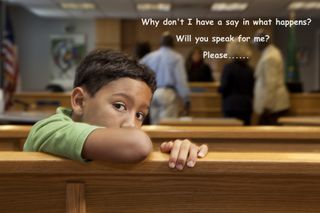
A growing body of research suggests that one of the most pernicious effects of high adult-incarceration rates can be seen in the struggles of children … who often lose a crucial source of motivation and support with their parents behind bars….
A very small subset of children — those with abusive parents — were found to be more likely to thrive academically and socially if their parents are incarcerated. But most children declined markedly. In fact, the new research suggests that prisoners’ children may be the most enduring victims of our national incarceration craze. “Even for kids at high risk of problems, parental incarceration makes a bad situation worse,” concluded Christopher Wildeman and Sara Wakefield in their recently published book, Children of the Prison Boom: Mass Incarceration and the Future of American Inequality.
Wildeman and Wakefield found that children with incarcerated fathers were three times more likely than peers from similar backgrounds to become homeless. They also suffered significantly higher rates of behavioral and mental-health problems, most notably aggression.
Kristin Turney, a professor of sociology at the University of California, Irvine, reached similar conclusions in a report published this past September. Turney found that children with incarcerated parents were three times more likely to suffer from depression or behavioral problems than the average American child, and twice as likely to suffer from learning disabilities and anxiety….
Within the last few years, however, a broad range of agencies and policy-makers have begun to frame the nation’s prison boom as a children’s issue. Last summer, the Justice Department launched a wide-reaching campaign to provide support to the children of imprisoned parents — by rethinking visitation policies and changing the protocol for arresting parents in front of children, for example. In August, the American Bar Foundation and the National Science Foundation invited key researchers, advocates and federal officials to the White House for a conference to discuss reducing the “collateral costs” to children and communities when parents are incarcerated. The conference was part of a larger inter-agency initiative begun in 2012 to focus the attention of participating agencies, including the Department of Education, on the children of incarcerated parents. A few months later, in November, the Federal Bureau of Prisons hosted its first-ever Universal Children’s Day, an event attended by nearly 8,500 children visiting more than 4,000 federal inmates….
John Hagan, a professor of sociology and law at Northwestern University, led the White House conference with his research collaborator, Holly Foster, of Texas A&M University. Fifteen years ago, in an oft-cited paper, Hagan first suggested that the effects on children might be “the least understood and most consequential” result of mass incarceration. Now Hagan is seeing his hypothesis proved. More than that, as his adolescent subjects enter adulthood, the effects are compounded: “Almost no children of incarcerated mothers make it through college,” he noted. “These people are now in early adulthood, and they’re really struggling.”
I have long believed and asserted that politicians and policy advocates truly concerned about family values and children’s interests should be deeply concerned about the over-use of incarceration as a punishment, especially for non-violent offenders. And I find fascinating and compelling the suggestion in this lengthy post at The Clemency Report titled “Children deserve legal standing when parents are sentenced.” Here is how the potent post by Dennis Cauchon starts:
Are children entitled to legal standing when parents are sentenced in criminal cases? The current answer is “no.” The answer should be “yes.”
Today, the well-being of a defendant’s children is close to irrelevant in criminal courtrooms. Institutional indifference to children is official policy. This is the most profound legal error in the last 35 years, the mistake that made mass imprisonment possible.
Criminal courts produce millions of orphans every year using procedures that weigh only the interests of adults in the courtroom. This is a profoundly ignorant way for a bureaucracy to act. Removing a mother or father from a child’s life is a not mere “side effect”of the day’s procedure; it is an “effect,” often the most important thing that will happen that day.
Children deserve rights — legal rights, established in law — to end their mistreatment in criminal courts.
In domestic courts, the “best interest of the children” is the trump card standard that overrides almost all other adult needs in divorce and custody cases. In criminal courts, defendant’s children are treated as trash in the back row. This difference is legally shameful and morally indefensible.